Key takeaways:
- The price is set by the scope of work your site needs, not by the number of keywords.
- Four factors determine the scope: the technical foundations, how much content is missing, competition, and who does the work.
- Three common models: a one-time audit, consulting that guides an in-house team, and an ongoing service that includes implementation.
- Pricing by ranking or a “link package” is a warning sign, not a deal.
- To compare proposals, break each one down into what is actually done each month.
Why there’s no single price
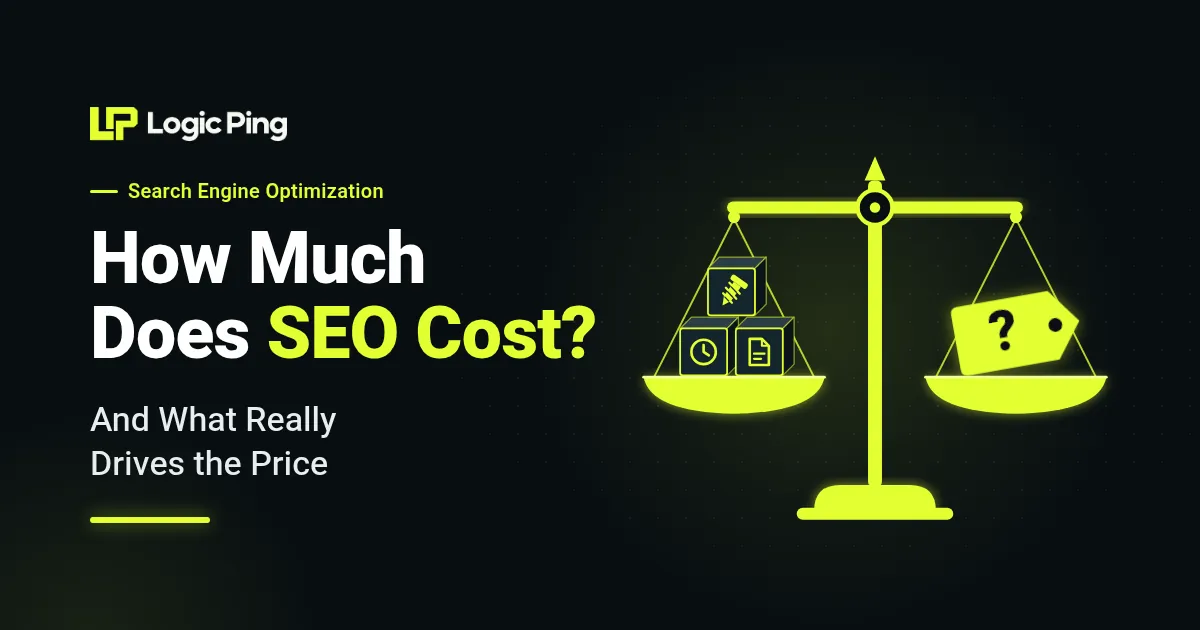
SEO isn’t one product but a series of tasks: technical fixes, writing and improving pages, earning mentions from other sites, and measurement. A site with sound foundations and a good page for every service needs little work. A new site in a competitive field needs a lot.
So the right question isn’t “how much does SEO cost”, but “how much work does my site need, and who will do it”. You get that answer from a diagnosis, not a phone call.
The four factors that set the scope
| Factor | What increases the work | What reduces it |
|---|---|---|
| Technical foundations | Blocked pages, duplicates, broken redirects after a rebuild, a slow site | A sound site that is already crawled and indexed |
| Missing content | Services without their own page, generic pages with no prices or FAQs | A detailed page for each service, already ranking on page 2 |
| Competition | A field where competitors have invested in content and mentions for years | A local or niche field with few strong competitors |
| Who does the work | No one in-house writes or updates the site | A writer, developer or marketer who implements according to guidance |
There’s also a fifth factor, less about the site itself: how many sites and services need promoting. A site with three services in one area is very different from a store with thousands of products.
Three engagement models, and what each includes
| Model | What it includes | When it fits |
|---|---|---|
| One-time audit | Crawl, Search Console, content, competitors and measurement. At the end, a list of findings and a prioritized plan | Before you start, before you choose a provider, or when it’s unclear what’s holding the site back |
| Ongoing consulting | Regular meetings, guidance for your team, review of what was done and tracking of the data | When someone in-house does the work and you need direction |
| Ongoing service with implementation | Technical fixes, writing and improving pages, work on mentions, a monthly report | When no one in-house does the work and it needs to run every month |
In most cases it’s right to start with an audit. It sets the scope of the ongoing work, and prevents paying for a package that doesn’t fit the site. We cover what such an audit includes in SEO Audit.
What not to pay for
- Pricing by ranking. No one controls rankings, and Google says no one can guarantee the top spot.
- A fixed number of links. Buying links violates Google’s spam policies, and the damage stays with you after the contract ends.
- “SEO for 20 keywords”. A list of keywords doesn’t say what will be done on the site, and usually includes easy keywords that don’t bring customers.
- Dozens of identical pages, one per city. Google defines pages created only to capture queries as a violation of its spam policies.
How to compare proposals
Break each proposal down into one question: exactly what will be done on the site each month, and who does it. A good proposal spells out:
- What was checked before the price was set, and what was found.
- Which pages will be written or improved, and which questions they will answer.
- Who makes the changes on the site.
- How success will be measured: leads, clicks and impressions by page.
- What happens if you want to stop, and what stays with you.
A proposal that doesn’t answer these questions isn’t necessarily cheaper, even if the number is lower. We put together 12 full questions for the meeting and a contract checklist in How to Choose an SEO Agency.
What to do now
- Check in Search Console how many pages are indexed, and which queries already bring impressions.
- List your main services, and check whether each one has its own page.
- Decide who in-house can do the work: writing, updating the site, or no one.
- Ask every provider for a proposal that starts with an audit, and break it down using the questions above.
We cover the process itself, and what each stage includes, in our Organic SEO guide.
Frequently asked questions
Why do SEO proposals vary so much in price?
Because they price different things. Some include writing content and making changes on the site, some only recommendations. Some start with a diagnosis, and some are a fixed package. To compare, break each proposal down into what is actually done each month.
Can cheap SEO work?
Yes, when the site is in good shape, the field isn’t competitive, and someone in-house does the work. A low price becomes a problem when it relies on buying links or on a “package” that includes no real work on the site.
Why not pay by ranking?
Because no one controls rankings, and Google says no one can guarantee them. Pricing by ranking also encourages targeting easy keywords that don’t bring customers.
How long do we pay before we see results?
Usually 3-6 months before a clear trend appears, depending on the state of the site and the competition. Technical fixes can have an effect sooner.
Which is cheaper: organic SEO or paid ads?
With paid ads you pay for every click, and the traffic stops when the budget runs out. With SEO you invest in the site, and the traffic continues. In the short term, paid ads are faster. In the long term, SEO is usually cheaper per lead.
Sources: Do you need an SEO?, Google Search Central · Spam policies for Google web search, Google Search Central.
Want to know how much work your site needs?
In a consulting session, we go through your site and Search Console and define what needs to be done, in what order and by whom. That way you know the right scope before you pay for a package.