Key takeaways:
- Google ranks pages, not websites. Every service that matters to you needs its own page that answers the questions about it.
- Results build gradually. In our experience, most sites show a clear trend after 3 to 6 months, depending on their starting point and the competition.
- Ranking on Google now also affects visibility in AI Overviews, because the answers draw on the same index.
- What doesn’t work: buying links, keyword stuffing, and dozens of near-identical pages for every city.
- Measure with Google’s free tools, Search Console and GA4, and look at leads, not just rankings.
How Google decides who ranks first
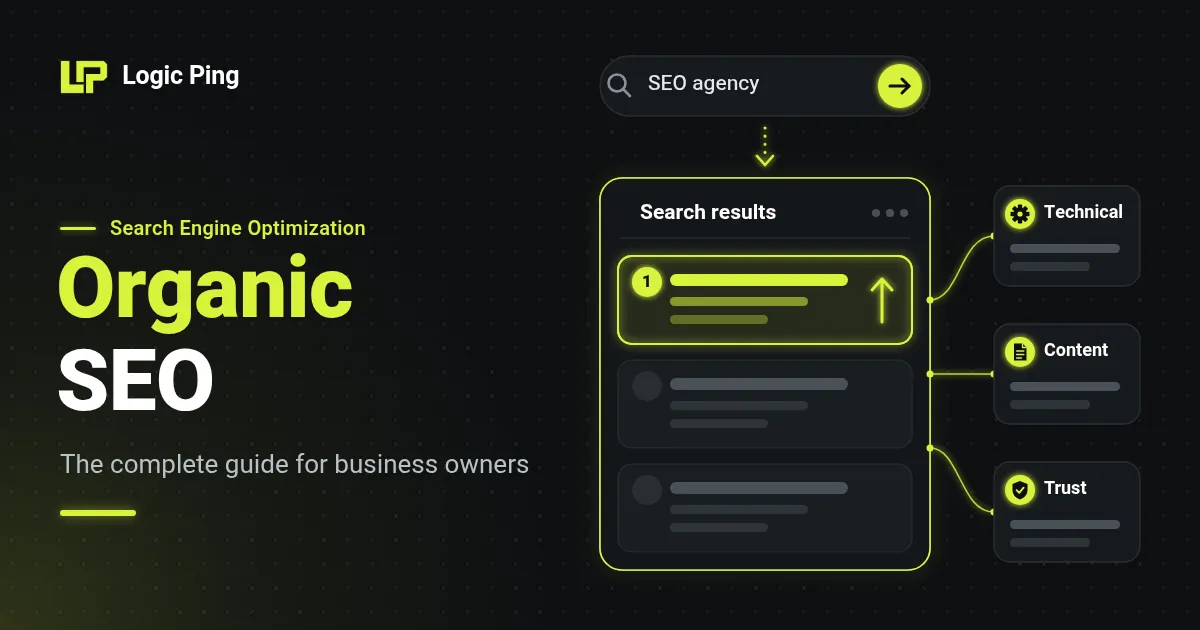
Google doesn’t accept payment to rank a site higher or crawl it more often, and rankings are determined automatically. The process has three stages, and a problem at an early stage blocks everything after it:
- Crawling. Google’s crawler reaches pages through links and sitemaps, and downloads their content. A page with no links pointing to it, or one blocked in robots.txt, won’t be found.
- Indexing. Google analyzes the text, images and videos, detects duplicate pages and chooses one version to show (the canonical). A page that isn’t indexed won’t appear in any search.
- Serving results. For every search, Google looks through its index for the most relevant, highest-quality pages, based on hundreds of factors. Location, language and device change the results, so someone searching in one city sees something different from someone in another.
Two implications worth knowing:
- There is no single “first place” for everyone. Results vary by user, so you measure average position in Search Console, not by searching from your own computer.
- There is no “fast submission” to Google. Anyone offering a special relationship with Google, or submission to thousands of search engines, is selling something Google itself warns against.
The three layers of SEO
The three layers work together. Great content won’t help if Google can’t crawl it, and perfect technical foundations won’t help if there’s nothing worth ranking.
1. Technical foundations
The goal: Google finds, understands and indexes the right pages.
- A valid sitemap and a robots.txt that doesn’t block important pages.
- One URL per page, with a correct canonical and no duplicate www and non-www versions.
- 301 redirects from old URLs to the relevant page, not to the homepage.
- Speed and stability on mobile (Core Web Vitals).
- Structured data (schema) that describes the business, its services and its articles.
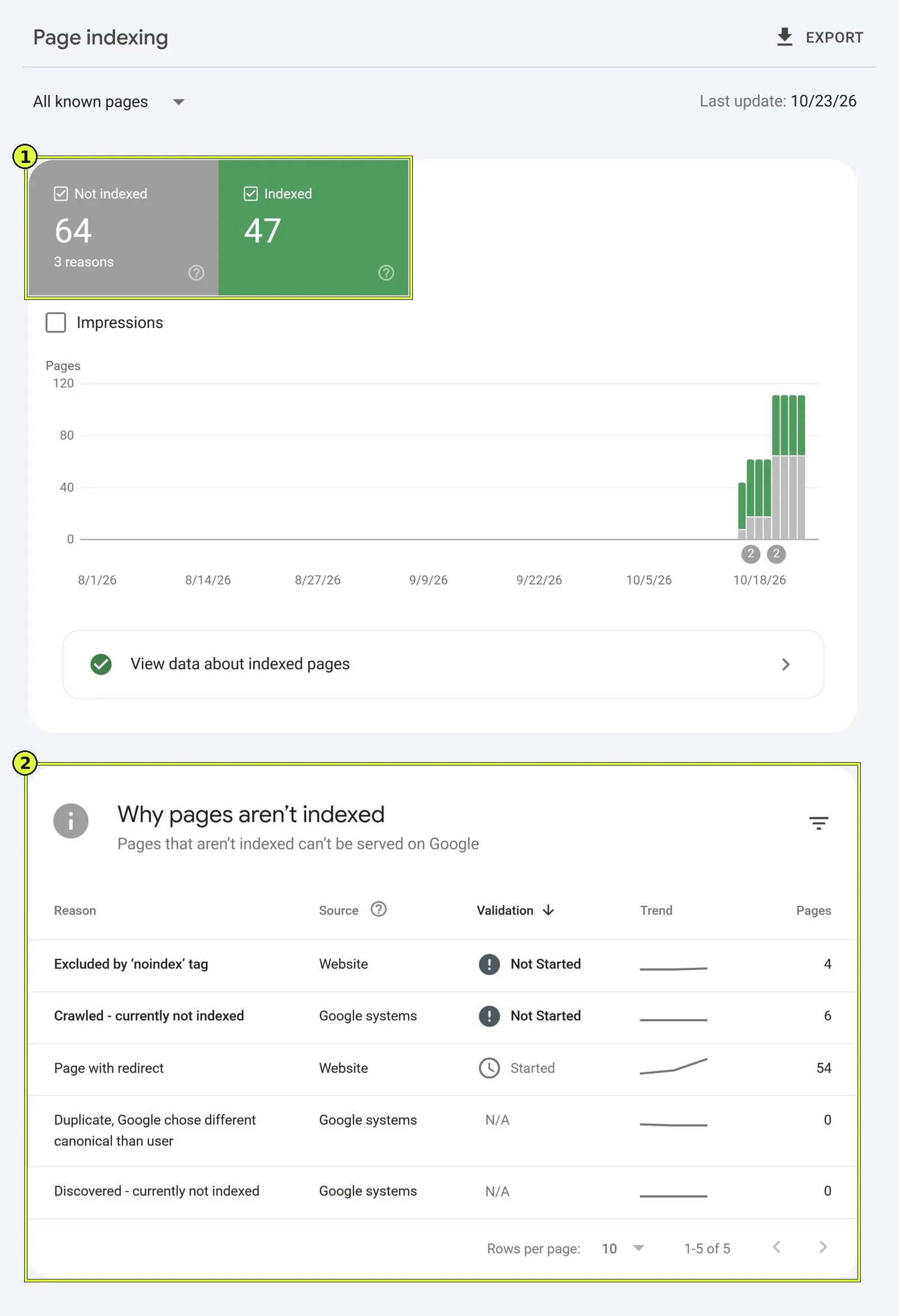
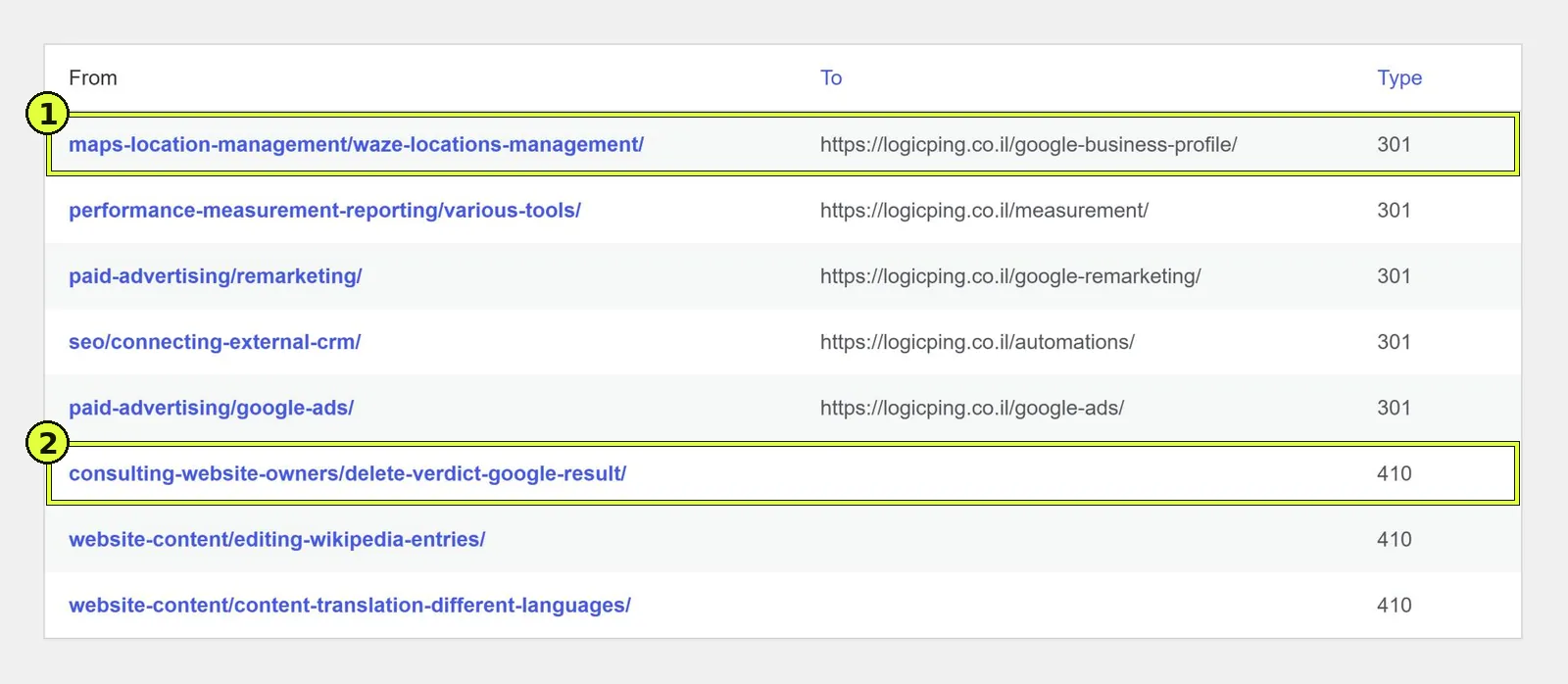
A real example: in October 2026, we found 24 old URLs on our own site that redirected to the homepage, and Google had flagged them as soft 404s. We pointed each one to the relevant page, and services that no longer exist now return a 410 status.
2. Content
The goal: a page that answers what the searcher wants to know, better than the other results.
- Keyword research in your customers’ own words. People search for “SEO” and also “search engine optimization”, “SEO company” and also “SEO agency”. You see this in Search Console data instead of guessing.
- One page per search intent. Someone searching “what is SEO” wants an explanation. Someone searching “SEO agency” wants a supplier. Those are two different pages.
- First-hand content. Google asks for content created primarily for people: original, comprehensive information with clear expertise. A page that summarizes what ten other sites already say adds no value.
- A clear title and H1. The blue line in the results is what makes people click.
- Internal links. Articles link to service pages, and service pages link to articles that explain things in depth.
3. Trust and authority
The goal: Google, and your readers, see that you are a reliable source in your field.
- Who is behind the site. A detailed About page, named authors, a real address and phone number.
- Links and mentions that are earned. Partnerships, press coverage, research that others cite. Buying links violates Google’s spam policies.
- Business Profile and reviews. For local businesses this is a core part of SEO, especially in Maps.
SEO in the age of AI Overviews and AI Mode
Since Google added AI answers, some questions get an answer above the regular results. That doesn’t make SEO obsolete, but it changes what you measure and what you write.
- The answers draw on the regular index. Google says its AI features rely on its core ranking systems. A site that ranks well is a strong candidate to be cited in the answer.
- Fewer clicks on simple questions. A short definition question gets answered on the spot, so content that only defines terms brings in less traffic. Content that helps people decide, compare and take action still gets clicks.
- Longer questions. Google reports that queries in AI Mode are almost three times longer than regular searches. A page that also answers the follow-up questions fits better than one built around a single keyword.
- New measurement. Search Console now has a generative AI performance report that shows how your content performs in AI answers.
We cover working with AI engines themselves, including ChatGPT and Perplexity, in our guide What is GEO.
What a structured SEO process looks like, step by step
A good process starts with a diagnosis, not with writing content. This is how we work:
- Audit the current state (weeks 1-2). A full crawl of the site, a review of Search Console and GA4, a check of structured data and of visibility in AI answers. The result is a list of issues, ordered by priority.
- Keyword and competitor research. What people search for, who ranks in your place today and why. Each query is mapped to one page on the site.
- Technical fixes. First whatever blocks indexing, then whatever slows the site down. Redirects, duplicates, schema, speed.
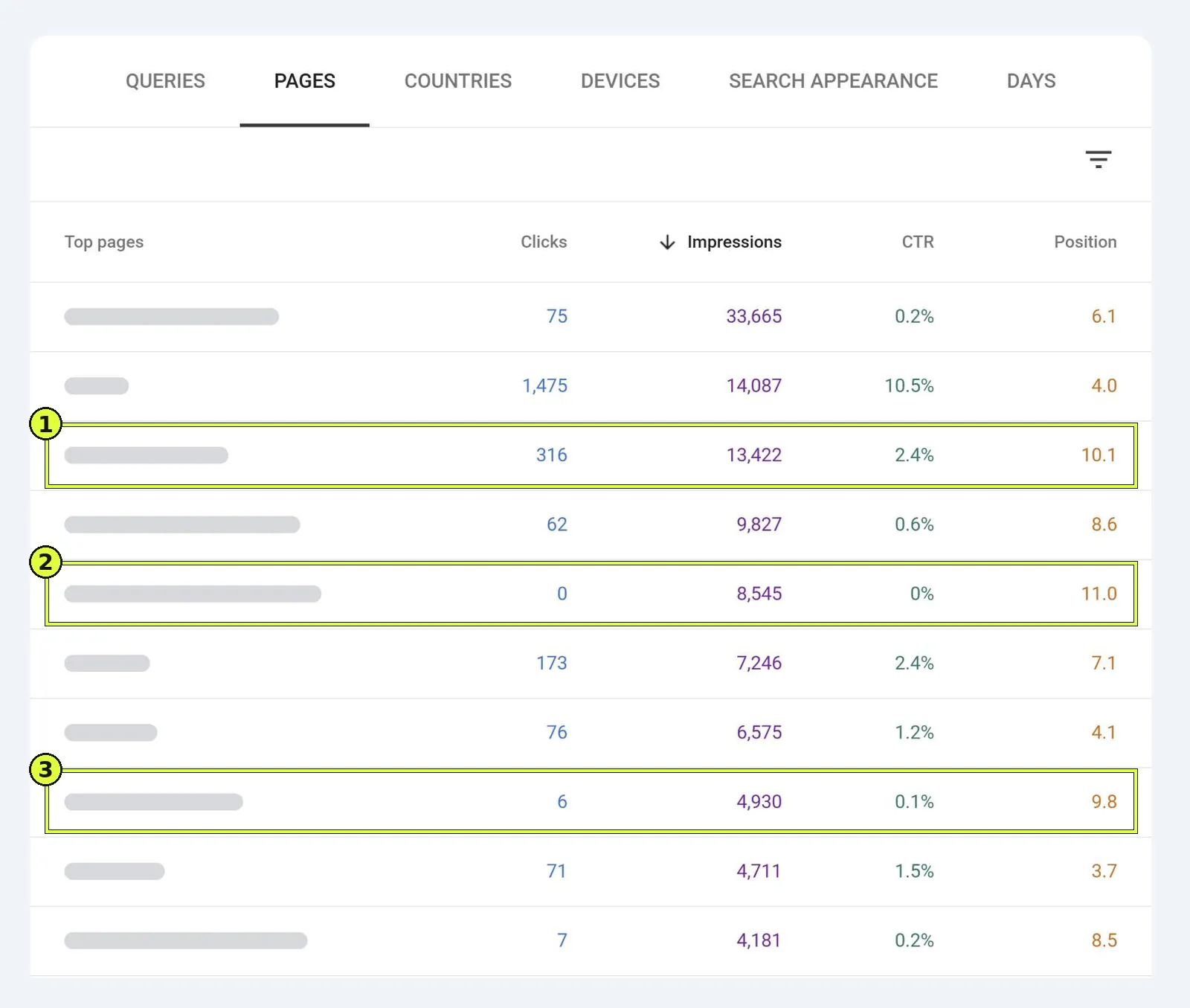
- Improve existing pages. Pages already on page 2 of the results are the fastest opportunity. Better titles, content that answers more fully, and internal links.
- New content, to a plan. One core guide per topic, surrounded by articles that answer real questions. A steady pace beats bursts of activity.
- Off-site presence. Business Profile, industry directories, partnerships and press coverage.
- Measurement and a monthly report. Impressions, clicks and average position by page, and above all how many leads came from organic search. Every month, decide what comes next.
How long SEO takes, and what affects the cost
There’s no single answer, because every site starts from a different place. Based on our experience, these are reasonable expectations:
| Site situation | What you see first | Roughly when |
|---|---|---|
| Existing site with technical issues | Pages entering the index and rising impressions | Weeks to two months after the fix |
| Existing site with pages on page 2 | Pages moving up to page 1 | 2-4 months |
| New site, or after a migration | First impressions and low rankings | 3-6 months for a clear trend |
| Highly competitive field | Secondary terms and long questions first | Six months or more for the main terms |
What affects the cost
- The size and condition of the site. A 20-page site is different from a store with 3,000 products. A site with many issues needs more work up front.
- How much content needs to be written. This is usually the largest cost component.
- Competition. SEO for a law firm in a big city is different from SEO for a niche industrial equipment manufacturer.
- Who makes the changes on the site. If you have a developer who implements the changes, the cost is lower than a service that includes implementation.
The right question isn’t “how much does SEO cost” but how much a customer from search is worth, and how many of those customers your site is losing today.
How to choose an SEO agency
Google publishes its own list of questions to ask before hiring an SEO, and reminds site owners that they are responsible for what an agency does on their behalf. These are the questions, and what you want to hear:
| Question | A good answer |
|---|---|
| Can I see examples of previous work? | Real Search Console data from a client (even anonymized), not just a screenshot of a #1 ranking |
| Do you follow Google’s guidelines? | Yes, with an explanation of what that means in practice: no bought links and no mass-produced content |
| What results should we expect, by when, and how will you measure them? | Goals set after an audit, measured in leads and traffic, not only in rankings |
| What experience do you have in our industry and market? | Experience in your language and market, and in each market you sell to |
| How long have you been doing this? | Years, and the ability to explain what has changed in the work since |
| How will we communicate, and will you explain every change? | A regular report, a list of the changes made and the reason for each one |
Red flags, according to Google
- A guaranteed #1 ranking. Google says nobody can guarantee that.
- A “special relationship” with Google or “priority submission”.
- Vague explanations of what exactly they will do on your site.
- Unsolicited emails offering SEO services.
- Submission to thousands of search engines, or “link packages”.
- Tools that are “approved by Google”. Google doesn’t approve such tools.
Already working with an agency and not sure it’s working? A second opinion checks what was actually done against what was promised, without committing you to switch providers.
We’ve collected all 12 questions, a proposal comparison table and a contract checklist in How to Choose an SEO Agency.
What you can do yourself this week
Some of the work doesn’t need an expert. Seven steps any business owner can take in a few hours:
- Open a Search Console account and verify your site, if you haven’t already.
- Submit a sitemap and check the Pages report to see which pages weren’t indexed, and why.
- Go through the 20 queries with the most impressions in the Performance report. That’s where you see how people actually search for you.
- Find pages with an average position of 8 to 20, and improve their title and first paragraph.
- Make sure every core service has its own page, answering what it is, who it’s for, how it works and how long it takes.
- Update your Google Business Profile: hours, services, photos and a link to your site.
- Set up your leads (form, phone, WhatsApp) as key events in GA4, so you know what organic traffic actually brings in.
If any of these steps raises questions you can’t answer, that’s exactly where a site audit saves months of trial and error.
Frequently asked questions
What’s the difference between organic SEO and paid search?
With paid search you pay for every click, and the traffic stops when the budget runs out. With organic SEO you invest in your site, and the traffic keeps coming after the work is done. Most businesses use both, and paid search data shows which keywords bring in customers.
Can anyone guarantee a #1 ranking on Google?
No. Google says nobody can guarantee a #1 ranking, and recommends staying away from anyone who does.
How many pages does a site need to rank?
As many as it takes to answer your customers’ questions, and no more. Google warns that pages created at scale just to capture queries violate its spam policies.
Can I write content with AI?
You can use it as a tool. What matters is the page’s value to the reader, not the tool used to write it. Content that recycles what’s already online, without experience or fact-checking, won’t stand out even if a person wrote it.
Is SEO still worth it now that there are AI answers?
Yes. Google’s answers draw on its regular index, and a site that ranks well is the natural candidate to be cited in them. What changes is the type of content that earns clicks.
Should I hire an SEO agency or a consultant?
It depends on who will do the work. If you have a writer and a developer, consulting that directs the work may be enough. If nobody can implement it, you need a service that includes implementation.
Sources: How Search works, Google Search Central · Do you need an SEO?, Google Search Central · Creating helpful, reliable, people-first content, Google Search Central · Optimizing your website for generative AI features, Google Search Central.
Not sure what’s holding your site back?
In a site audit, we crawl your site, go through Search Console and GA4, look at who ranks in your place and why, and flag what to fix first. You get a work plan you can carry out yourself or with us.