Key takeaways:
- Ask every agency the same 12 questions, in the same order, and write down the answers.
- A good proposal starts with an audit of your site, not a fixed package of “keywords and links”.
- The accounts, content and data should stay yours, and the contract should say so.
- Google says no one can guarantee a #1 ranking, and that the site owner is responsible for what the agency does on their behalf.
- Measure leads and search traffic, not just a list of rankings.
The 12 questions, and what to listen for
The questions are grouped into four sets: the work itself, measurement, ownership and the contract, and experience. The note after each question says what it reveals.
The work itself
- What will you check on our site before you start? A good answer: a full crawl, Search Console, indexing, speed and competitors. An agency that sends a price quote before looking at your site is offering a package, not a plan.
- What will you do in the first three months, and in what order? A good answer starts with whatever is blocking indexing and with pages already close to page 1, before writing new content.
- Who writes the content, and how do they learn our field? Content written without talking to someone who knows the customers recycles what’s already online. Google asks for original content made for people first.
- How do you earn links? A good answer: partnerships, articles and content that others cite. “A package of 30 links a month” is buying links, which violates Google’s spam policies.
Measurement
- How will you measure success? A good answer: leads from organic search, plus clicks and impressions by page. A list of “20 keywords in position 1” doesn’t tell you whether anyone contacted you.
- Can we see a real monthly report from a current client? A good report lists the changes made, the reason for each, and what’s planned for next month.
- When will we see change, and what happens if we don’t? A good answer gives a range based on the state of the site, and an agreed checkpoint where you review the direction together. We cover realistic timelines in our Organic SEO guide.
Ownership and the contract
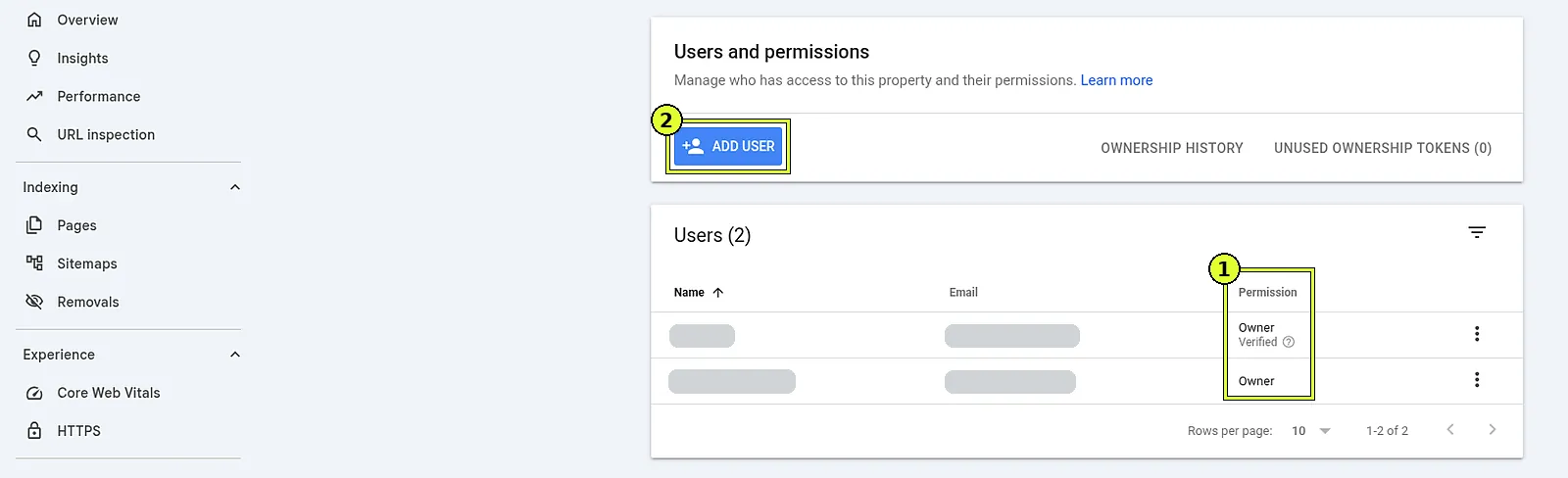
- Whose name will Search Console, GA4 and the business profile be under? The right answer is yours, with the agency getting permission only. That way the data stays with you even if the work stops.
- What happens if we stop working together? The content, the site changes and the links should stay. An agency that removes content or pages when the contract ends wasn’t working for you.
- What do you need from us, and who makes changes to the site? A good answer lists the access needed, time from someone who knows the business, and who handles technical changes.
Experience
- Who will actually work on our site? The person who pitched in the meeting isn’t always the one doing the work. Ask about the experience of whoever will handle your site, and how many sites they manage at once.
- Can we see data from previous work in a field like ours? A good answer: real before-and-after Search Console data, even without the client’s name. A single screenshot of a #1 ranking doesn’t show much.
How to compare proposals
SEO proposals are structured differently, so comparing price to price is hard. Put every proposal into one table with these columns:
| What to check | A strong proposal | A weak proposal |
|---|---|---|
| Starting point | Findings from your site and Search Console data | A template that doesn’t mention your site |
| What you get each month | A list of defined actions and deliverables | “Ongoing optimization” with no detail |
| Content | What gets written, for whom and for which question | Only a number of articles per month |
| Links | How they earn them | A guaranteed number of links |
| Measurement | Leads, plus clicks and impressions by page | Only a list of rankings |
| Commitment | A reasonable trial period and exit with notice | A long commitment with no checkpoint |
A low price on a weak proposal usually reflects less work, not efficiency.
What the contract should say
Before you sign, check that these seven clauses are in the contract, in explicit words:
- The monthly scope of work and deliverables.
- The content written and the changes made to the site belong to you.
- The accounts (Search Console, GA4, business profile) are registered in your name.
- A ban on buying links and on methods that violate Google’s guidelines.
- A monthly report listing the changes made.
- Cancellation with notice, and what happens at the end.
- Who on the team works on your site, and what happens if that person changes.
Google reminds site owners that they are responsible for what’s done on their behalf. If the agency bought links and the site was hurt, the damage stays with you after the contract ends.
Red flags in the meeting
- A promise of the #1 spot, or of a specific position by a specific date.
- A “special relationship” with Google, or a “Google-approved” tool.
- A link package with a fixed number every month.
- Refusing to give you access to accounts, or opening accounts in the agency’s name.
- A vague explanation of what will be done on the site, such as a “secret method”.
- An unsolicited email saying “we found serious problems on your site”.
The same questions work when choosing a service for visibility in AI engines. We covered the questions that fit that case in How to Choose a GEO Agency.
What to do now
- Print the 12 questions and ask them of every agency you meet.
- Put the proposals into the comparison table.
- Ask for a real monthly report from a current client.
- Make sure Search Console and GA4 are registered in your name before the work starts.
- Go through the contract checklist before you sign.
Frequently asked questions
Which is better: a large agency or a small provider?
It depends on who actually works on your site. At a large agency, your site may be handed to a new team member who manages many sites. With a small provider, check that they have time for your site.
How long should we commit for?
A first term of 3-6 months is reasonable, because that’s usually how long it takes to see a trend. A commitment of a year or more without a checkpoint leaves you no room to change course.
Should we choose an agency that ranks first on Google?
It shows they know how to promote themselves, but it doesn’t prove they fit your field. Ask them the same 12 questions.
What if we already work with an agency and aren’t sure it’s working?
Ask for a list of what was done in the last three months and compare it to your Search Console data. A second opinion does that check for you.
Can we do SEO ourselves?
Part of the work, yes: Search Console, your business profile and improving existing pages. The first seven steps are laid out in our Organic SEO guide.
Sources: Do you need an SEO?, Google Search Central · Spam policies for Google web search, Google Search Central · Managing owners, users, and permissions, Search Console Help.
Want help choosing between proposals?
In a consulting session, we go through the proposals you received with you, compare them to your site’s data in Search Console, and flag what’s missing from each. You leave knowing what to ask for before you sign.