Key takeaways:
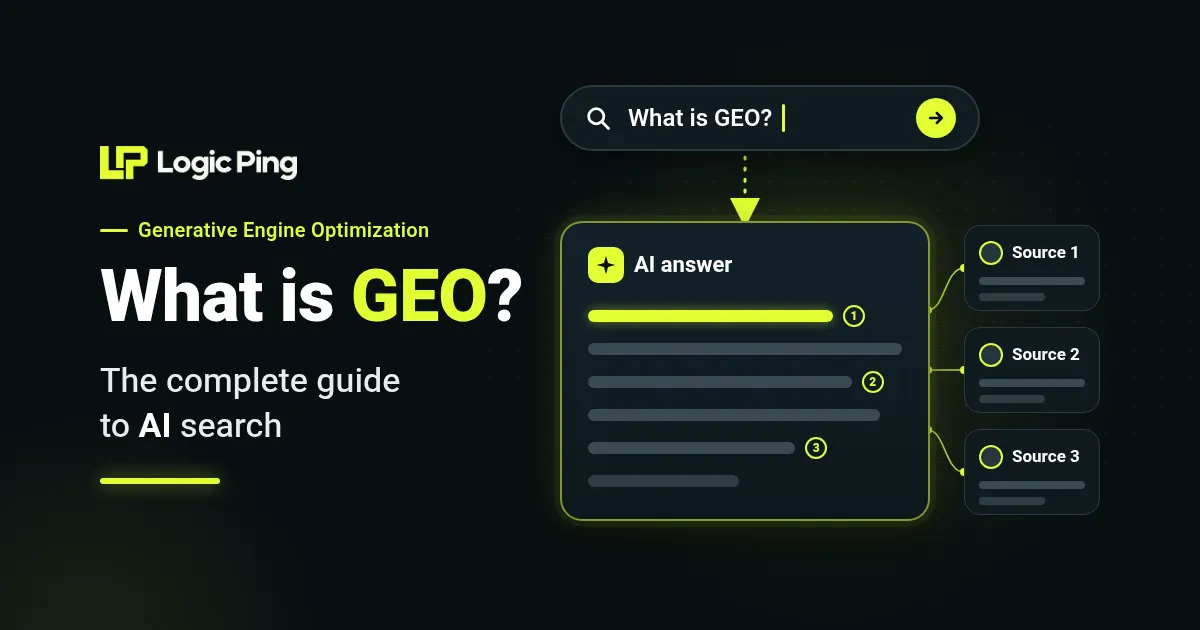
- AI engines don’t show a list of links. They write an answer and cite a handful of sources next to it. The goal is to be one of those sources.
- Google states plainly that optimizing for AI search is still SEO. There is no shortcut through special files or writing “for the machine.”
- What does change: questions get longer, the engine runs its own follow-up searches, and what others write about you carries more weight.
- This is already mainstream. Google’s AI Overviews and AI Mode appear in many countries and languages, and ChatGPT now runs ads next to its answers.
- You can measure it: the generative AI performance report in Search Console, chat referrals in GA4, and a regular manual check of real customer questions.
What GEO is, and how it differs from AEO and SEO
All three terms describe the same goal, being found when people look for you, but in different kinds of results. Search engine optimization (SEO) is about where your site ranks in the list of results. AEO (Answer Engine Optimization) is about the direct answer, such as a featured snippet or a voice assistant reply. GEO is about the answers a language model writes, and the sources it chooses to cite.
| SEO | AEO | GEO | |
|---|---|---|---|
| Where you appear | The 10 results on Google and Bing | Featured snippets, “People also ask”, voice assistants | AI Overviews, AI Mode, ChatGPT, Gemini, Perplexity, Copilot |
| What the user sees | A list of links | A short answer from one source | A written answer that combines several sources |
| What counts as success | Ranking and a click | Your page supplies the answer | Your business is mentioned, cited and linked |
| Typical query | “SEO agency Tel Aviv” | “How long does SEO take?” | “Which agency fits a B2B software company selling in Europe, and what should we ask in the first call?” |
| What moves the needle | Technical foundations, content, links | A clear, well-structured answer | Everything SEO needs, plus depth, first-hand experience and mentions beyond your site |
The difference that matters to a business owner is what happens after the search. In regular results, the user opens several sites and compares them. In an AI answer, the comparison has already been done for them, and they see three names instead of ten links. If you are not mentioned there, you are not part of the conversation.
In practice, you don’t have to choose between the three. A site that doesn’t rank on Google will rarely appear in AI Overviews, because the answers draw on the same index. GEO is an extra layer on top of SEO, not a replacement for it. We cover SEO itself in our organic SEO guide.
How an AI engine builds an answer and picks sources
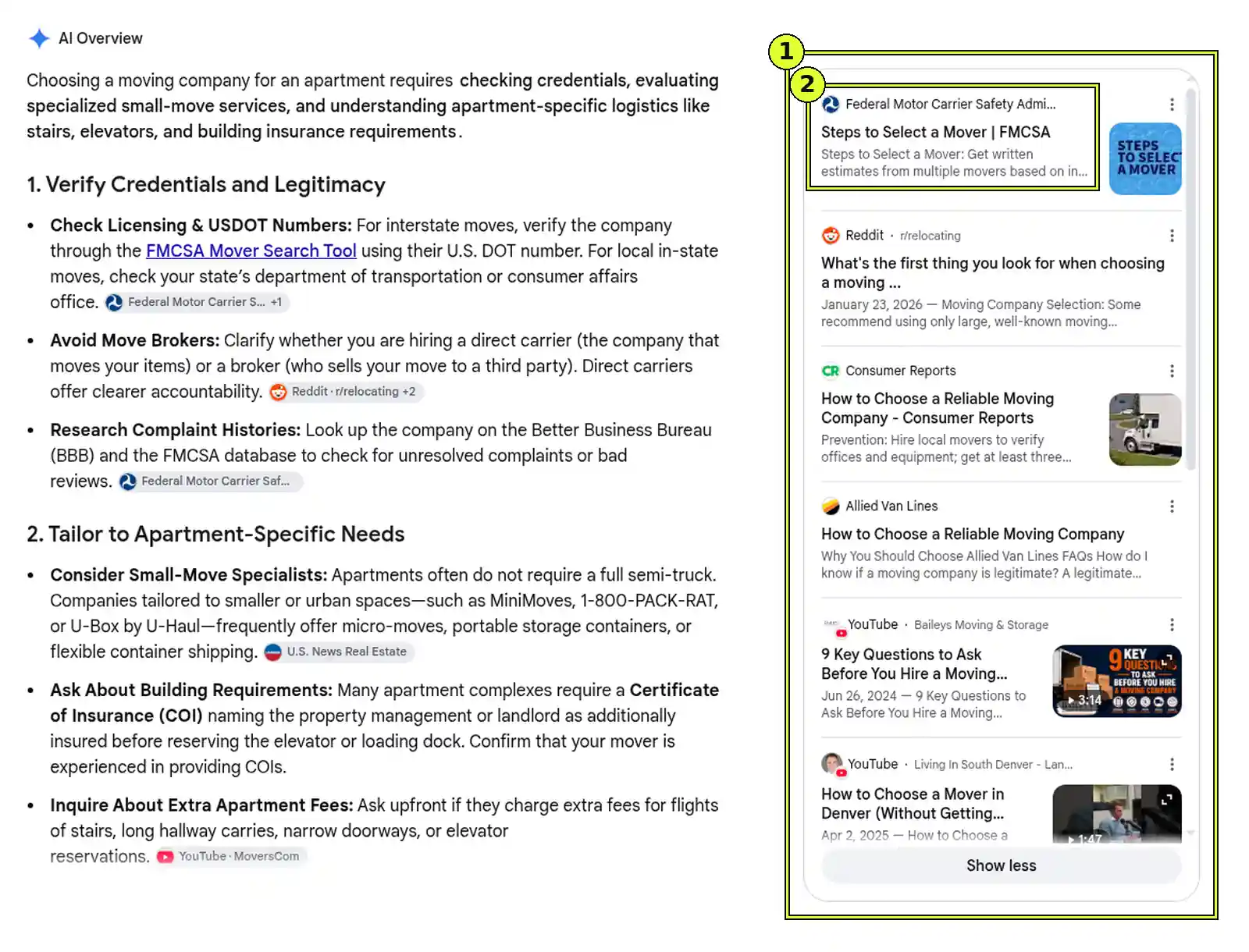
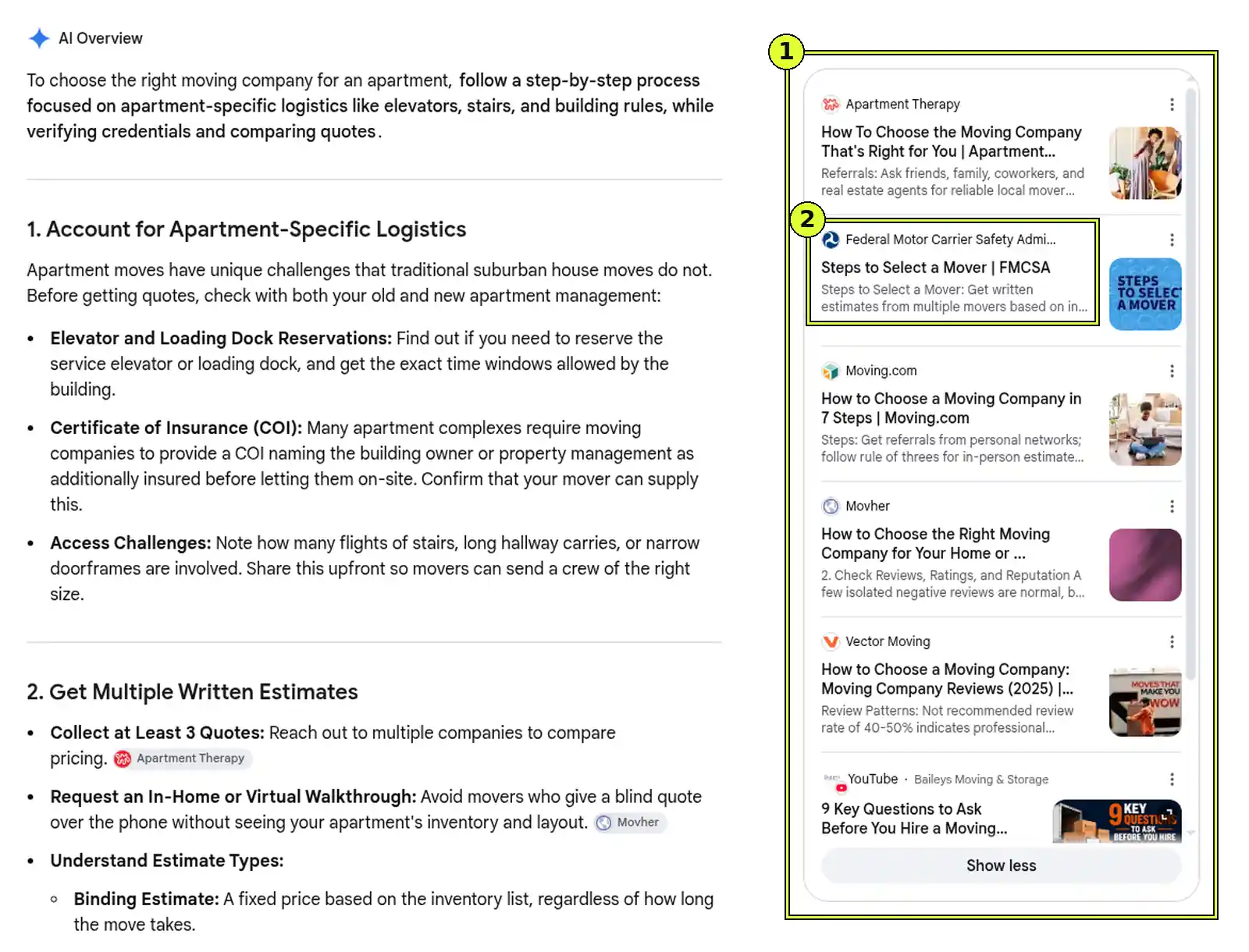
A language model doesn’t “know” who the best supplier in your city is. When a question needs current information, it searches the web, reads a few pages and writes an answer from what it found. Google describes this process in its official guidance for AI Overviews and AI Mode, and other engines work on a similar principle:
- The user asks a full question. For example: “We’re a 40-person software company. Who can help us show up in ChatGPT?”
- The engine breaks the question down (query fan-out). It runs several related searches: “GEO agency”, “GEO for SaaS companies”, “how much does GEO cost”.
- The engine retrieves pages from its index (RAG). On Google, those pages are selected by the same ranking systems that power regular search.
- The model writes the answer. It combines what it found with what it learned in training, and links to the sources that support the answer.
What this means for a business:
- You need to be indexed and ranking. A page that doesn’t surface in the sub-queries won’t make it into the answer.
- You need to answer the follow-up questions too. A page that explains what GEO is but not who it’s for, how long it takes or what it costs misses most of the queries.
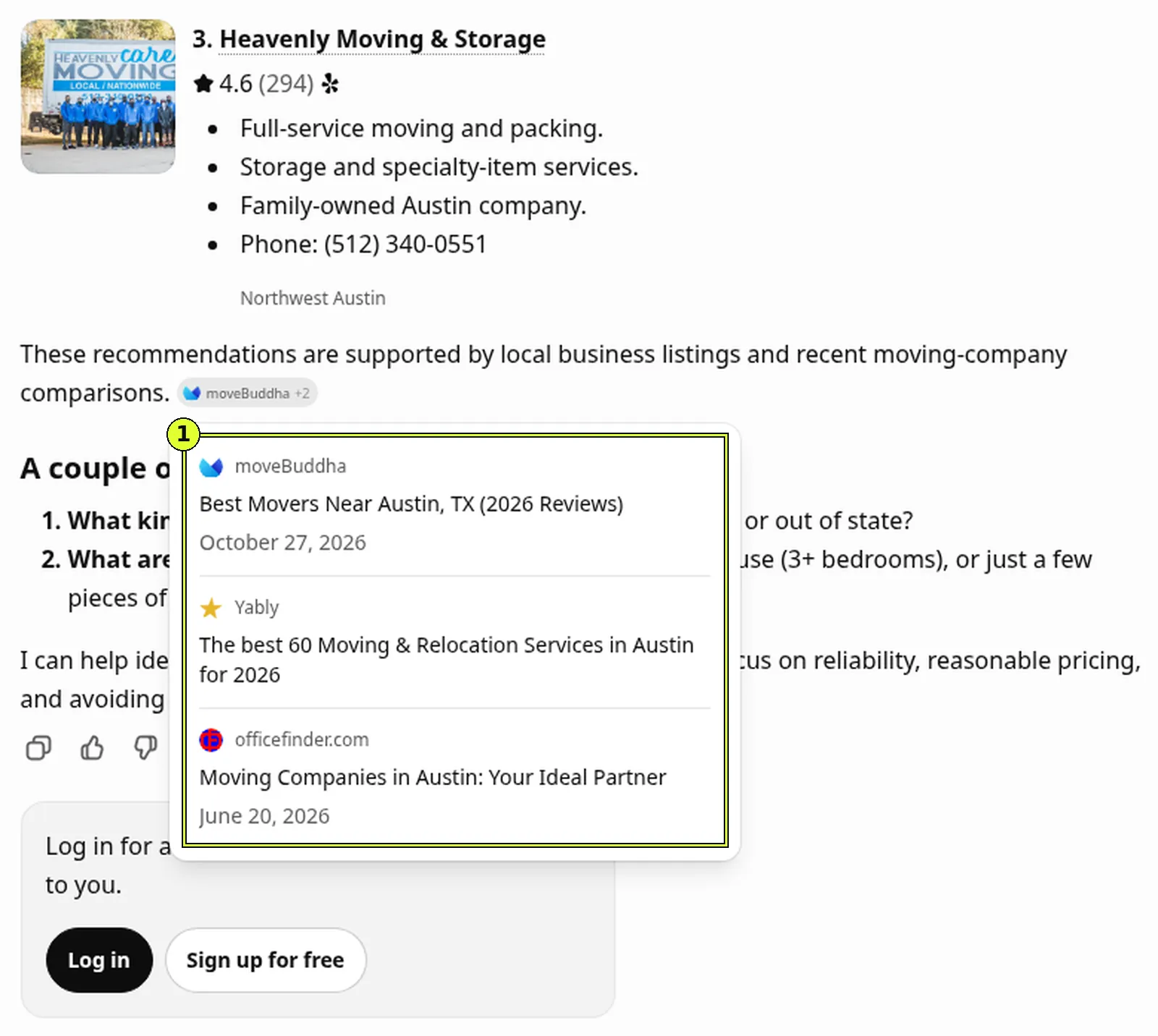
- What others write about you ends up in the answer. An article, a review or a vendor directory on another site can be the source the engine learns about you from.
- Not every answer comes from a live search. When ChatGPT answers without searching, it relies on its training data. There, a long-standing presence on other sites matters even more.
Which AI engines matter for your business
Each engine draws on a different source of information, so each has different entry requirements. This is the picture as of late October 2026:
| Engine | Where it gets information | What it takes to be included |
|---|---|---|
| Google AI Overviews | Google’s index. Shown above the regular results for many queries | An indexed page that is eligible to appear with a snippet, and a site set to “included” for generative AI in Search Console |
| Google AI Mode | The same index, with more sub-queries per question | Same as AI Overviews, plus content that handles complex questions |
| Gemini | Training data, plus Google Search when it needs current information | A strong Google presence, including your Business Profile |
| ChatGPT | Training data, plus live web search (ChatGPT search) | Allow the OAI-SearchBot crawler in robots.txt. Sites that block it are not shown in ChatGPT search answers |
| Perplexity | A live search for every question, with prominent citations | Allow its crawler, and publish clear content that is easy to cite |
| Copilot | Bing’s index | A site that Bing crawls. Register it in Bing Webmaster Tools |
Two practical conclusions:
- Make sure you’re not blocking crawlers by accident. Many sites block AI crawlers without knowing it, through a Cloudflare setting or a security plugin. OpenAI’s training crawler (GPTBot) is separate from its search crawler (OAI-SearchBot), and you can decide on each one separately.
- Google is the starting point. Two engines on this list pull directly from Google’s index, and Gemini relies on it. A business that doesn’t exist on Google starts behind in every engine.
What actually influences visibility in AI answers
GEO work happens in two places: on your site and off it. Both are needed, and in most businesses we audit, the off-site side is the weaker one.
On your site
- Crawlable foundations. Pages that load fast, text that lives in the HTML rather than only in images, a robots.txt that doesn’t block, and a valid sitemap. Everything else depends on this.
- Content nobody else has. Google uses the term non-commodity content: content based on first-hand experience and expertise, not a rehash of what’s already online. A test you ran, data from real work, a photo from the field.
- Answers to complete questions. A service page that covers “what it is”, “who it’s for”, “how it works”, “how long it takes” and “what affects the price”. Without creating a separate page for every phrasing of the question.
- Clear facts about the business. Who you are, what you do, for whom, where, and who is behind the work. One clear definition sentence at the top of your homepage and About page makes a big difference.
- An identifiable author. Content signed by a real person with proven experience, backed by an About page and a professional profile.
- Images and video. Google recommends adding high-quality images and videos where they’re relevant, and notes that standard image and video SEO already helps here.
Off your site
- An up-to-date Google Business Profile. Google says business details from your profile can appear in AI answers. Hours, services, photos and reviews.
- Genuine mentions. Articles, interviews, talks, vendor directories and industry listings. These are the sources an engine uses to learn that you’re a player in your field.
- Consistent details everywhere. The same name, address, phone number and service description on your site, your profile, LinkedIn and directories. An outdated description in one directory can show up in an answer years after your services changed.
What doesn’t work: 5 common myths
In May 2026, Google published official guidance on optimizing for its AI features, and updated it in July. Part of it addresses myths. These are the ones we see most often in agency proposals:
| The myth | What Google says |
|---|---|
| “You need an llms.txt file” | You don’t need special AI files, Markdown versions or special markup to appear in Google. Search ignores them |
| “You need to break content into small chunks” | There is no such requirement. Structure should serve the reader |
| “You need to rewrite your site in an AI style” | There is no need to write in a special way for AI search |
| “Adding schema is enough” | Structured data is not required for AI answers. It still helps with rich results |
| “We’ll generate lots of pages and mentions” | Pages designed to manipulate AI answers violate the scaled content abuse policy. Artificial mentions don’t help as much as they seem to |
Two notes from our experience:
- The guidance covers Google. Other engines haven’t committed to the same rules. An llms.txt file, for example, does no harm and takes minutes to set up. It’s just not a reason to pay for a service.
- Tools that promise to show your “ChatGPT ranking”. Google warns against tools that claim access to its internal systems. AI answers vary from question to question and from user to user, so “ranking first in ChatGPT” isn’t a metric that exists.
How to check whether your business appears, and how to measure it
You can measure GEO in three places, all of them free. Start measuring before you change anything, so you have a baseline to compare against.
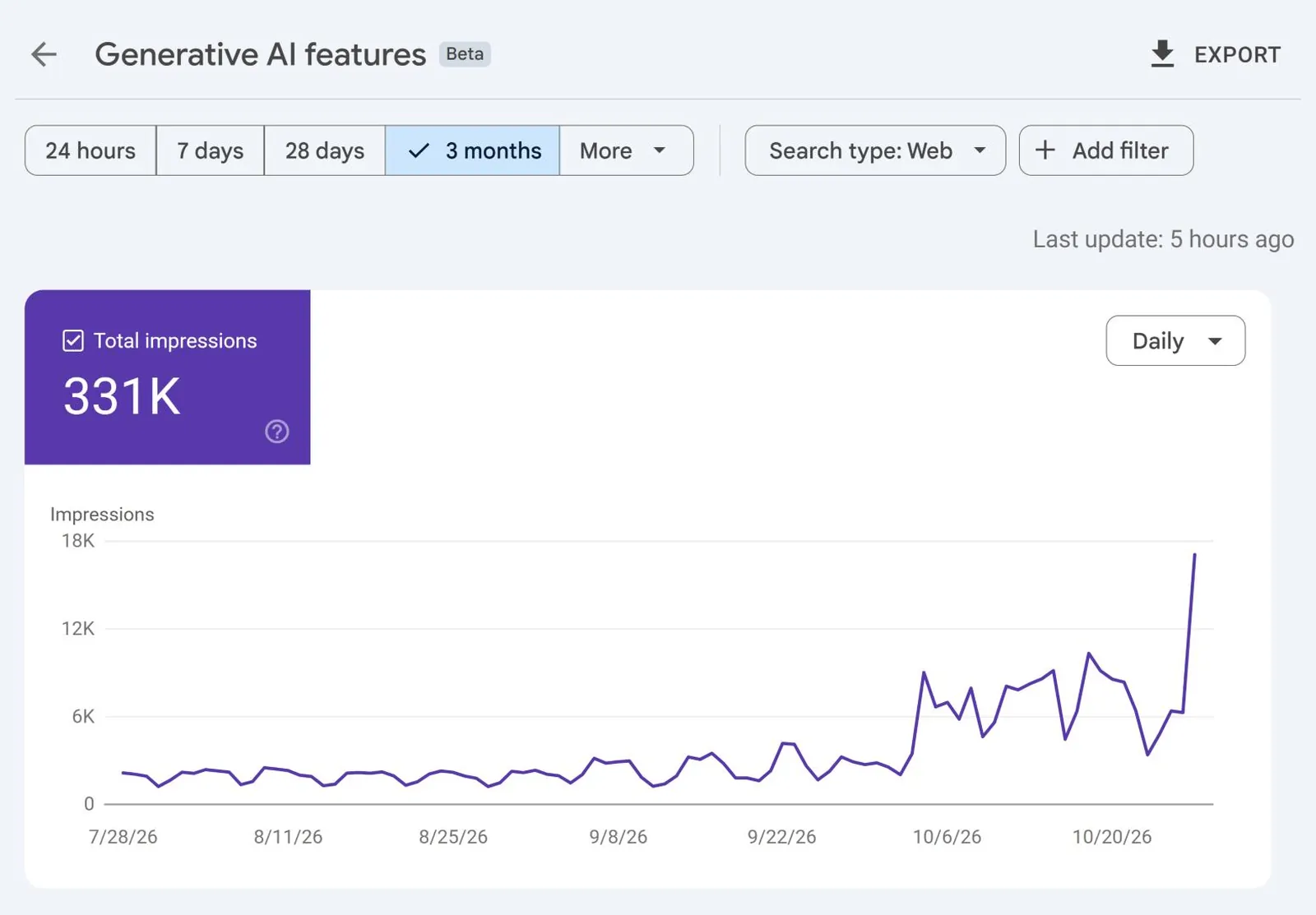
1. Search Console: the generative AI performance report
In 2026, Google added a report that shows how your site’s content performs in its AI search features. While you’re there, check that your site is set to “included” for generative AI in Google Search.
2. GA4: traffic from chat assistants
A user who clicks a link in an answer arrives as referral traffic. In the Traffic acquisition report, filter the session source with this regular expression:
chatgpt|openai|perplexity|gemini|copilot|claudeSave the filter as a permanent report and add your lead event to it, so you can also see how many leads that traffic brings in. Keep in mind that some users copy a name from the answer and search for it on Google, so the visit shows up as a branded search rather than AI traffic.
3. A regular manual check
This is the only way to see what the engines say about you when nobody clicks:
- Write down 15 to 20 questions a real customer asks before contacting you. Full questions, not keywords.
- Ask them in ChatGPT, Gemini, Perplexity and AI Mode, in a private window without being signed in.
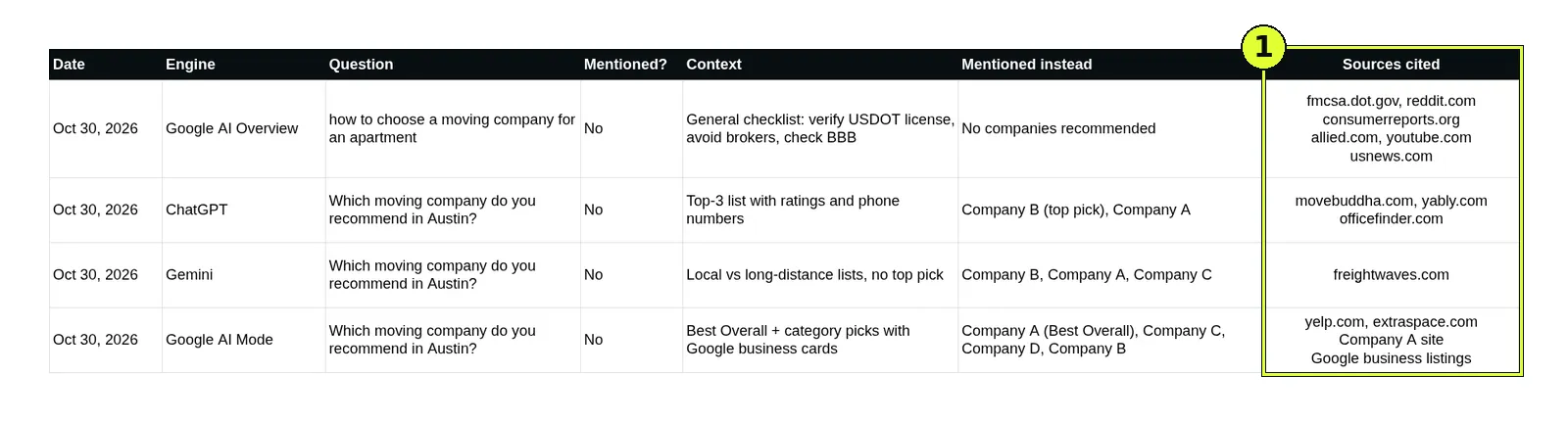
- Log in a spreadsheet: whether you were mentioned, in what context, who was mentioned instead of you and which sources were cited.
- Repeat the same questions, worded the same way, once a month.
The most important column in the sheet is “sources cited”. It shows which sites shape the answers in your field, and those are the places you want to be.
Who GEO is for, and how long it takes
GEO matters most for businesses whose customers compare suppliers before they get in touch. For them, one question in ChatGPT can replace half an hour of searching.
| Type of business | How urgent | What to do first |
|---|---|---|
| B2B and technology companies | High. Vendor research increasingly happens in chat | Solution pages that answer the buyer’s questions, and mentions in vendor directories |
| Professional services (legal, medical, consulting) | High. People ask detailed questions before they call | Signed expert content, a detailed About page and reviews |
| Local businesses | Medium. The Google Business Profile still does most of the work | A complete Business Profile, reviews and a page for each service |
| Ecommerce stores | Rising. AI answers show products from shopping feeds | An up-to-date product feed in Merchant Center, and category pages that explain how to choose |
How long it takes. Technical changes, such as unblocking crawlers, take effect within days to weeks. New content first has to be indexed and start ranking, which in most cases shows after a few months. The slowest change is in what models “know” from training, because it depends on new versions of the models themselves. Anyone who promises you’ll appear in ChatGPT within two weeks is promising something outside their control.
What to do now: 6 first steps
- Ask the engines about yourself. Three questions a customer would ask, in four engines. Save the answers. The full method, with 20 questions and a tracking sheet, is in our ChatGPT visibility check.
- Check robots.txt and your security settings. Make sure Googlebot, Bingbot and OAI-SearchBot aren’t blocked, including in Cloudflare.
- Check Search Console. Are your service pages indexed, and is the site set to “included” for generative AI?
- Write one definition sentence. Who you are, what you do and for whom. Place it at the top of your homepage, your About page and your profiles.
- List 10 questions customers ask in the first meeting. Check which ones get a good answer on your site. That’s your first content plan.
- Set up measurement. A chat-traffic report in GA4 and a monthly check sheet. Our analytics and conversion tracking service can help.
If you’re considering hiring an agency for this work, go through the questions in How to Choose a GEO Agency first.
Frequently asked questions
Does GEO replace SEO?
No. Google says that optimizing for AI answers is still SEO, and its answers draw on the same index and the same ranking systems. GEO adds work on full questions and on your presence beyond your own site.
Can I pay to appear in ChatGPT?
You can buy an ad. ChatGPT now shows ads that are labeled as sponsored and kept separate from the answer. You can’t buy a mention inside the answer itself.
How much does GEO cost?
It depends on the state of your site and on the competition. A site with sound foundations and good content mainly needs content work and an off-site presence. A site that can’t be found on Google needs to fix that first. The accurate way to know is an audit of where you stand today.
Do I need content in every language I sell in?
Yes, if you want to appear in answers in that language. AI Overviews and AI Mode work in many languages and pull content in the language of the question. If you sell in several markets, publish a separate version for each language and connect them with hreflang links.
Should I block OpenAI’s crawlers?
Treat them separately. Blocking OAI-SearchBot removes your site from ChatGPT search answers. GPTBot is used to train models, and that decision is a separate one. For most businesses that want to be found, it’s better to allow both.
How do I know GEO is working?
Compare against your baseline: impressions in the generative AI report in Search Console, visits and leads from chat assistants in GA4, and changes in your monthly manual check. Ask new customers how they found you, too.
Sources: Optimizing your website for generative AI features, Google Search Central · Generative AI performance reports, Google Search Central Blog · Overview of OpenAI Crawlers, OpenAI · Ads in ChatGPT, OpenAI Help Center.
Want to know what the engines say about you?
In our site audit, we ask the engines the questions your customers ask, review your technical foundations and Search Console, and flag what’s keeping you out of the answers. You get a clear action list, ordered by priority.